


EDITORIAL
BOOK HERITAGE AND BOOK CULTURE
The purpose of this article is to study initiatives to promote books and reading in Siberia and the Far East, identify trends and prospects. The article presents strategic government initiatives that prioritize books and reading. Based on the materials of the “Cultural Map of Russia. Literature. Reading” project and the All-Russian competition “The Most Reading Region”, the contribution of the executive and legislative authorities of the Siberian and Far Eastern region to the development of reading infrastructure is analyzed, elements of the book support system at the regional level are characterized, effective solutions and best practices for engaging the population in the literary and book environment are analyzed. The activity indicators of libraries and organization of events to promote books and reading in the Siberian and Far Eastern Federal Districts in 2019–2021 are analyzed. Leaders in the number of book-related literary events (regional, city, and local levels) are identified. The creation and implementation of “Literary Maps” (electronic resources on literary local history) are identified as an important factor in the development of the literary potential of the regions. General trends in book and reading promotion in the regions are identified. The leading role of central libraries in the regions is recognized.
The purpose of this article is to trace the evolution of research approaches to ego-documents in the historical scholarship, from their philosophical origins up to contemporary interdisciplinary practices. The relevance of this topic stems from the growing interest for ego-documents in the modern historical scholarship, which views them as key sources to study subjectivity, everyday life, and identity. It has been stated that methodological foundations for incorporating ego-documents into the historical discourse lie in such philosophical movements as hermeneutics, phenomenology, and narrative theory of identity. They have shaped approaches to ego-documents as special sources of historical knowledge, enabling an in-depth analysis of past events through individual texts and meanings. The “Annales” school made a special contribution to the restructuring of the research paradigm, shifting the focus from the event-based history and descriptions of lives of “individuals” to the mentality and everyday life of ordinary people. The German-language Alltagsgeschichte School and the microhistorical approach shaped the core methods of working with personal testimonies. Russian researchers’ rejection of ideologically driven Soviet paradigms resulted in their turn to the study of ego documents, borrowing terminology and approaches from everyday history and microhistory and developing their own practices for working with these sources. The article identifies the prospects for using personal sources in researches, consisting in consolidation of social sciences and humanities and further digitalization of research methods.
The purpose of the article is to characterize the post-war letters of fellow soldiers as one of the types of ego documents that allow reconstructing the history of the formation of military units and their military path during the Great Patriotic War, as well pay attention at post-war sociocultural and commemorative practices. The article introduces into scientific circulation the post-war letters of fellow-veterans as one of the types of ego-documents and forms of preserving historical memory about the Great Patriotic War. For the first time it presents the history of creation and the combat path of the 5th Separate Guards’ Motorcycle Warsaw-Berlin Red Banner Order of Suvorov 3rd Degree Regiment of the 2nd Guards Tank Army. Information from the unique personal correspondence of the author of the article with veterans of the regiment was analyzed and systematized, as well as documents identified in the Central Archive of the Ministry of Defense of the Russian Federation. The 4514 fund of the 5th separate guards’ motorcycle regiment was examined: combat log (01.04.1944 – 30.06.1945); reports of hostilities (18.07.1944 – 07.08.1944); minutes of the general Komsomol meetings of the regiment (24.04.1944 – 22.11.1944).
The research results demonstrate the possibility to reconstruct the history of the certain military unit for military-patriotic education of military personnel and the younger generation, for further work on the theory of ego documents, primarily when considering them as unique historical sources.
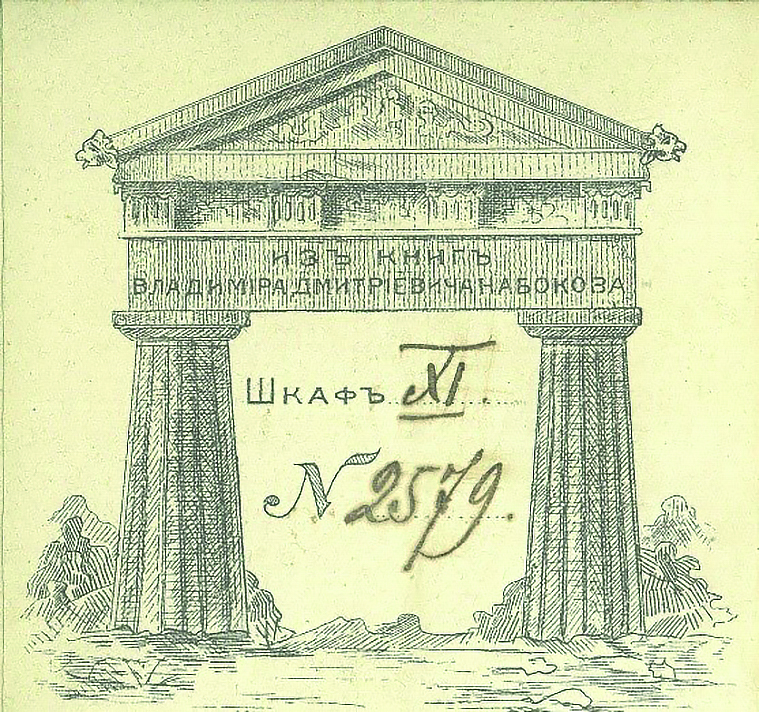
The collections of the Military Historical Library of the General Staff of the Armed Forces of the Russian Federation contain at least 2014 copies from the personal library of the lawyer, one of the founders of the Constitutional Democratic Party, Vladimir Dmitrievich Nabokov. Nabokov's book collection, estimated at 10,000 copies, was considered lost by researchers. A large number of books entered the Library of the Military Affairs Auditorium at the Petrograd District Commissariat for Military Affairs (today the Information Historical and Scientific Center – the Military Historical Library of the General Staff of the Armed Forces of the Russian Federation) from 1918 to 1921. Due to the lack of bibliographic descriptions and consideration of book features (book signs, inscriptions, bindings, marginalia), less than three hundred copies were known by August 2024. Based on them, the owner's collection was allocated, and the book monument collection “Library of V.D. Nabokov” was formed in the register of book monuments according to the socially significant criterion. A detailed study of the collection led to the discovery of more than 1,700 books with V. D. Nabokov’s ownership characteristics. Information about the availability of these copies, their features, and sources of replenishment are adduced for the first time. The purpose of the article is to introduce into scientific circulation information about the existence of the owner's collection “Library of V.D. Nabokov” in the possessions of the Military Historical Library of the General Staff of the Armed Forces of the Russian Federation. The data provided may be useful to bibliologists and library scientists, historians of legal science, and Nabokov philologists.
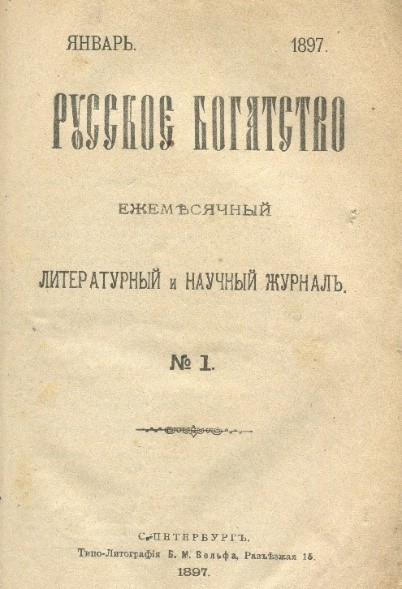
The relevance of the topic is determined by the important role of reading in the life of the individual and society. The purpose of the article is to analyze the demand for periodicals at the Troitskosavsky public library in 1891–1909. For the first time, the share of periodicals in the issuance of publications from its collections was calculated and ratings of popular magazines and newspapers were compiled – annual dozens of leaders and three generalized twenty of the most read: 1) for the 1890s; 2) 1900s; 3) for the entire period. In the course of the study, the share of periodicals for home lending was determined: on the average, it was one third of the total issuance. We proved that the most popular were magazines, which were at the same time literary, socio-political and scientific publications. “Russian Wealth”, which became the absolute leader, and “Russian Thought” as a whole for the entire period were issued more often than all other periodicals. Among popular ones, there were literary (“Niva”), historical (“Historical Bulletin”), pedagogical (“Education”), for children (“Sincere Word”), local (“Eastern Review”) publications, as well as “World of God” and “Bulletin of Europe”. The results obtained indicate the presence of modernization processes in the Siberians’ reading, which manifested themselves in the significant predominance in the issuance of secular publications over religious, an increase in interest in popular science and socio-political publications, and can be useful in recreating the detailed picture of regional reading.
The purpose of the article is to characterize the overall picture of the creation of the network of libraries of the Imperial Russian Geographical Society and its branches in the pre-revolutionary period and to present individual fragments from the history of their formation and basic tendencies of their development. In preparing the article, the author studied the office materials of the Imperial Russian Geographical Society and its branches, both published on the pages of annual reports and protocols of meetings, and unpublished, stored in the archive of the Geographical Society in St. Petersburg and in the regional archive of Orenburg. Information presented on the pages of anniversary works summing up the results of scientific activities of the Imperial Russian Geographical Society and its branches for a certain period is considered. The results of the study evidenced that basic forms, enlarging library collections of the Imperial Russian Geographical Society, were book exchange, donations and, to a lesser extent, the purchase of publications; the exchange stock based on doublet copies played the key role. Libraries of provincial branches of the Imperial Russian Geographical Society performed a special function of preserving local history publications, which contributed to the formation of the scientific base for studying regions and guaranteed preservation of their historical and cultural heritage.
LIBRARY, BIBLIOGRAPHY SCIENCE
The purpose of the article is to analyze current trends in the centralization of management in the library system of the Russian Federation and to develop scientifically based proposals for its decentralization, taking into account foreign experience. Based on a comparative analysis of organizational models of librarianship in Russia and Germany, key risks associated with hyper-centralization are identified, including the restriction of autonomy of regional libraries, obliteration of local cultural specificity, and weakening of horizontal professional ties. The author's concept of system reform is presented, based on the principle of "unity in diversity". It involves preserving the coordinating role of federal centers while expanding the independence of regional and municipal institutions. The directions of transformation are specified: introduction of a multilevel funding model, the reform of personnel policy through competitive selection and creation of public councils, reorientation of model libraries into platforms for innovation, development of network horizontal associations. The implementation of the proposed program will create a flexible and sustainable library system capable of effectively combining the fulfillment of national tasks with consideration of regional specifics and preservation of cultural diversity.
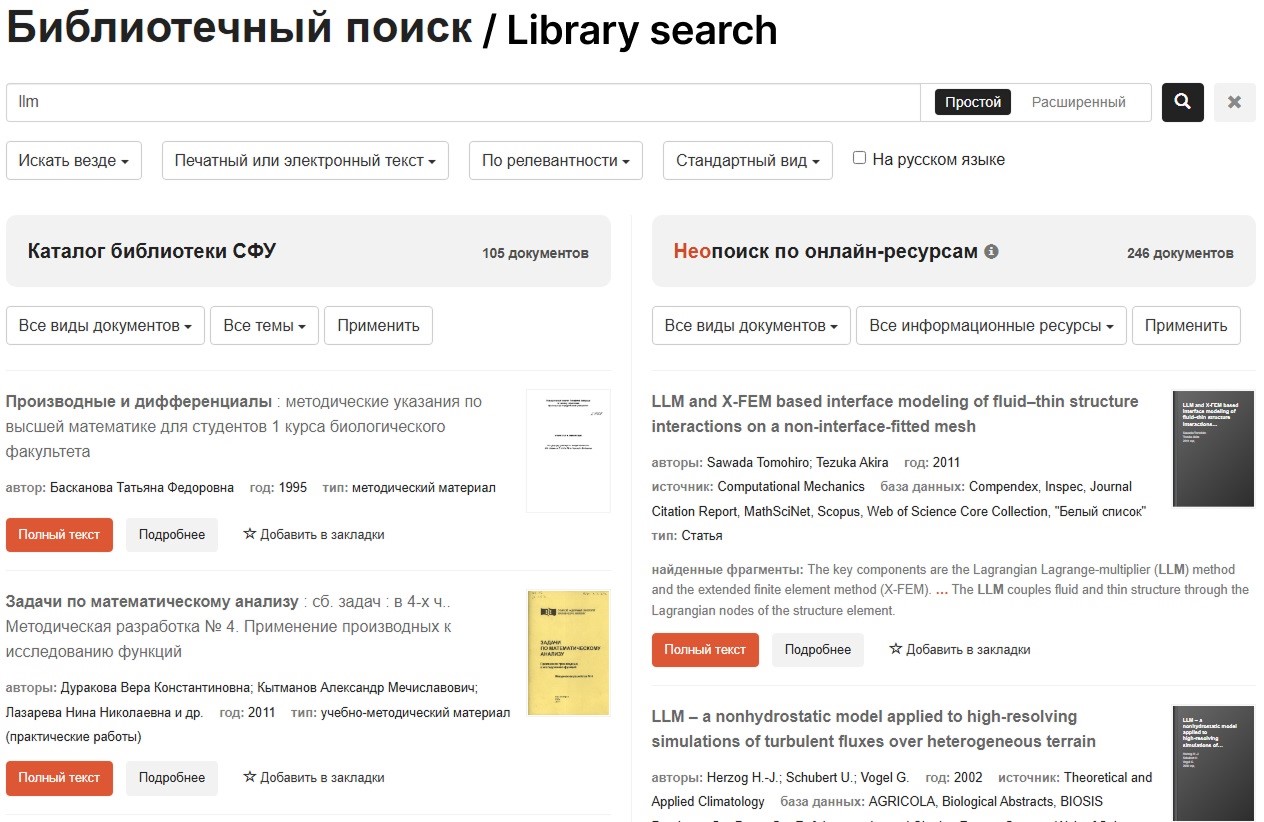
The objective of the article is to present the first results of the project aimed at creating the unified resource support system for higher education and Scientific institutions of the Krasnoyarsk Territory, the Republic of Khakassia, and the Republic of Tyva under the Program of activities of the Scientific and Educational Center «Yenisey Siberia». The relevance of this initiative depends on the need to create the system aimed at enhancing the effectiveness of educational processes and scientific research by consolidating electronic information resources of leading regional universities. In order to optimize the use of these resources, there was developed the integration of electronic resources of seven regional universities into the unified platform supported by the Neopoisk discovery service. This discovery service represents the large-scale centralized catalogue with the functional interface enabling quick and efficient searching across numerous local and subscribed collections, as well as external databases. The implementation of the project has provided broader access for teachers and students of the «Yenisey Siberia» participant universities to current materials and specialized sources. The emphasis is placed on developing the unified infrastructure for improving methodological collaboration among regional libraries and strengthening their role in the educational process and scientific research activities of universities.
Libraries have traditionally been included in the system of popularization of scientific and popular science knowledge and carry out this activity along with other social institutions of science, culture and education. Coordinated work of scientific libraries with direct suppliers of scientific knowledge – scientists and scientific organizations – will make it possible to achieve more effectively the goals of popularization activities by combining information, personnel, material and other resources, as well as the channels of disseminating information. The purpose of the article is to present the results of the study to identify promising areas of the scientific library work in the field of popularizing science, based on interaction with scientists and research organizations. The research was carried out on the basis of the Central Scientific Library of the Ural Branch of the Russian Academy of Sciences and scientific organizations subordinate to the Ministry of Science and Higher Education of the Russian Federation and under the scientific and methodological guidance of the Ural Branch of the Russian Academy of Sciences. The analysis of the activities of these organizations in the field of popularizing science and promoting scientific knowledge has been carried out. Using the method of content analysis, the official websites of organizations, annual reports on the activities of the Ural Branch of the Russian Academy of Sciences, and communities of organizations in social networks have been studied. Based on the data obtained, the directions of the scientific library' activities in the field of popularization of science based on cooperation with scientists and scientific organizations are proposed.
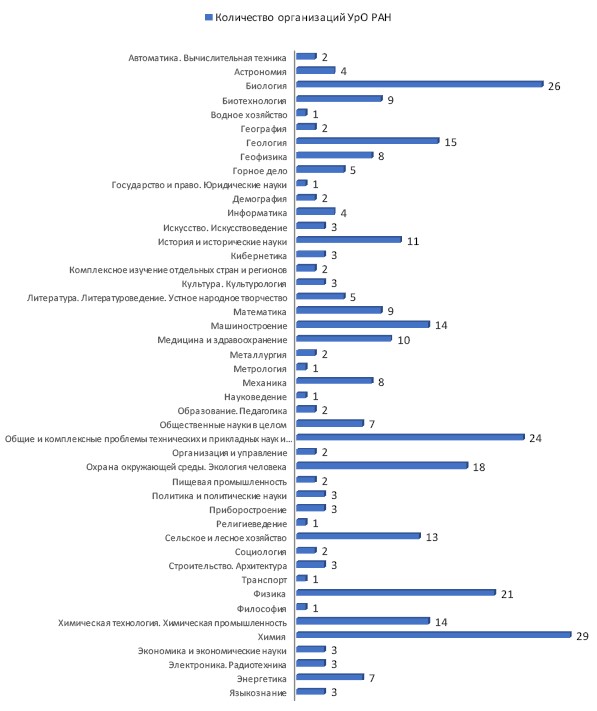
The purpose of the article is to present the results of the study of the scientific library users’ information needs, as one of the important and obligatory stages of thematic and typological acquisition plan – a fundamental document in the activities of any library, defining the boundaries of the selection of publications to its document collections, updating. For to study current and future information needs of users of the Central Scientific Library of the Ural Branch of the Russian Academy of Sciences (CSL UB RAS) the complex approach was applied containing the method of content analysis of subject categories of publications of scientific organizations of UB RAS in the databases Web of Science and Scopus and subject headings of State Rubricator of Scientific and Technical Information indicated in the passports of research topics of scientific organizations of UB RAS in the Unified State Information System for Accounting for Research, Experimental and Technological Work. As a result of the study, 530 subject headings were selected for inclusion in the updated thematic and typological acquisition plan of CSL UB RAS. This plan is implemented in the form of a database with opportunities to quickly update, search and upload data on the current needs of users. That allows to use it for selecting documents for the library collections, subscribing to periodicals, preparing exhibitions and scientific events, creating information products and services, and research work of the library.
SUMMARIES, REVIEWS, DISCUSSIONS
The article aims to study the role of national libraries (NL) in scientific activities and analyze their involvement in the scientific environment. The objectives of the research are: to identify the main areas of scientific activity of national libraries, to identify scientific departments in their organizational structure and to study ways of presenting the results of library scientific work. The scientific novelty lies in the comprehensive analysis of the research activities of foreign national libraries, based on the materials of websites, which makes it possible to expand the understanding of functions of national libraries as an active participant in the scientific process. Special attention is devoted to the significance of NL as scientific centers. The contribution of NL into science is examined and their important role in storing, preserving and transferring scientific knowledge underlined. The key aspects of their activities focused on supporting scientific research, promoting cultural heritage and ensuring the availability of information resources are highlighted. The initiatives of the world’s leading libraries aimed at strengthening their status in the global scientific community are noted. National libraries participate in the coordination of scientific research, developing interdisciplinary ties and partnerships with leading scientific and educational institutions. Libraries serve as keepers of historical memory and a treasure trove of cultural traditions, collecting and preserving the unique heritage of mankind. The article provides specific examples of successful practices of the leading national libraries, demonstrating their activity in the development of scientific projects and programs. It is concluded that scientific activities of national libraries acquire a fundamentally new importance in the context of rapid changes and global transformations taking place in the society and global scientific space. Along with preserving cultural heritage and providing access to knowledge, scientific activity is one of the key areas of work of national libraries of foreign countries. In the recent decades, the role of national libraries as research centers has increased significantly, especially in connection with digitalization, the development of digital humanities and introduction of AI technologies. Many national libraries are actively developing projects in the field of big text data mining and machine learning.
INFORMATION AND LIBRARY SYSTEMS, RESOURCES AND TECHNOLOGIES
The purpose of the article is to present mechanisms of impact of the library virtual space on the processes of intellectual development of users. The article substantiates the need to transform traditional library activities into the integrated digital space capable of meeting the modern society growing information needs. The key components of a modern library, including electronic catalogs, digital collections, online databases and interactive services, are examined; their role in supporting scientific research, educational process and self-education is determined. The influence of library services digitalization on the formation of information culture and the development of critical thinking of users is analyzed. The importance of training in the skills of effective search, evaluation and use of information in the digital environment is emphasized. Special attention is paid to the role of virtual library communities in creating a favorable atmosphere for knowledge exchange and cooperation. The problems and prospects of developing the virtual library environment in the context of ensuring equal access to information for all social groups, preserving cultural heritage and combating misinformation are determined.
LIFELONG LIBRARY EDUCATION
In the digital age, the content of library and information services is fundamentally changing. The professional standard “Library and Information Services Specialist” aims to update approaches in the educational process. The purpose of the article is to characterize the directions of professionalism development of students of the Library and Information Faculty (the eldest and the largest in the country) of the St. Petersburg State Institute of Culture (BIF SPbGIK) in the context of the professional standard requirements. Training of future specialists involves developing a variety of professional knowledge, skills, and abilities, which is one of the priority tasks of the faculty graduate departments. One of the platforms for developing a wide range of skills necessary for a library and information specialist is the Presidential Library named after B.N. Yeltsin. On the basis of the National Library, educational, industrial and pre-graduation internships are organized for students of the faculty, during which they master the basic technological library processes using information and communication technologies: building, accounting and processing library collections; cataloging of documents, reference and search apparatus maintenance; bibliographic and information-analytical activities; library and information services to users; library research, methodological and project activities, etc. The partnership between the St. Petersburg State Institute of Culture and the Presidential Library also includes the implementation of projects aimed at the spiritual, moral, and patriotic education of youth.
INFORMATION
A brief description of the activities of the Center for Library Education and Innovation in the field of bibliographic and librarianship training of the National Library of Tajikistan is given.

ISSN 2712-7915 (Online)


