


LIBRARY, BIBLIOGRAPHY SCIENCE
The article is dedicated to the centenary of the birth of Anatoly Nikolaevich Vaneev, an outstanding librarian, professor, Doctor of Pedagogical Sciences, librarian, teacher of higher education, Honored Worker of Culture, participant in the Great Patriotic War.
The purpose of the article is to characterize the reflection of theoretical provisions formulated by A. N. Vaneev in the directives of the professional standard that defines the content and personnel conditions for the implementation of library and information activities.
The relevance of the article is due to the need to comprehend the professional standard “Specialist in library and information activities” and the increasing role of methodical departments. In the Strategy for the Development of Librarianship in the Russian Federation for the period up to 2030, scientific and methodical support for library activities is considered as one of priority directions.
The article contains the results of the analysis of A. N. Vaneev’s works, professional standards “Specialist in library and information activities” and “Specialist in education”. The latter standard includes the description of the generalized labor function “Library and teaching activities in the educational organization”. Its structure includes the labor function “Organizational and methodical support for measures to develop students’ interest in reading”. The comparative analysis of the above-mentioned resources shows that the developers of the professional standard “Specialist in Library and Information activities” have internalized the ideas of A. N. Vaneev and consolidated them at the regulatory level.
Global transformations of the modern society have conditioned significant changes in the ways information is created, processed, and stored, resulting in the emergence of new generations of information consumers. Developing effective systems to meet their needs is one of the most pressing challenges facing libraries today. Modeling is an effective tool for solving it. Modeling methods allow integration of empirical and theoretical approaches in library research, combining experimentation with building logical constructs and scientific abstractions. The purpose of this article is to determine theoretical and methodological prerequisites for modeling the system of providing library and information resources to scientists and specialists of the scientific and educational complex. Based on the analysis of the modern scientific discourse and the results obtained by the staff of the Department of Scientific Research and Methodological Work of the State Public Scientific Technological Library of the Siberian Branch of the Russian Academy of Sciences, the main theoretical provisions and methodological approaches to building the conceptual model of the modern service system, taking into account the main trends of its development, are formulated.
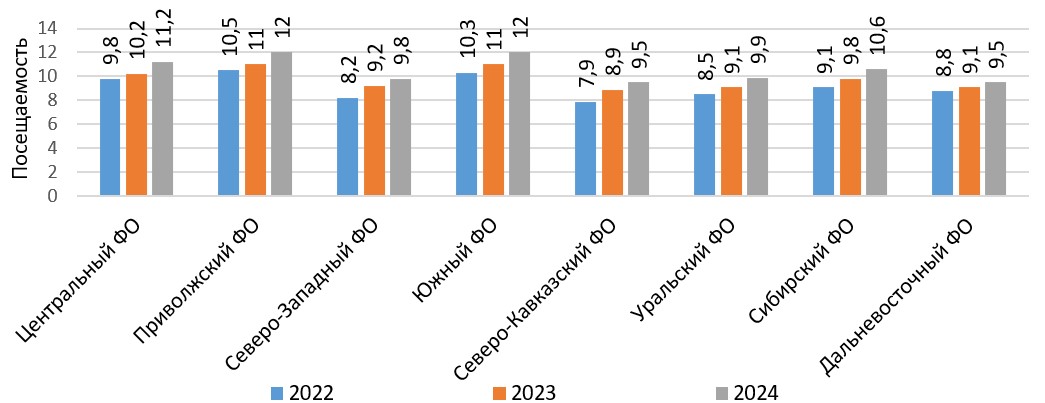
The Ministry of Culture of the Russian Federation conducts annual monitoring of public library performance indicators. Expert centers, primarily the National Library of Russia (NLR), summarize and analyze the initial data. Systematic analysis of library indicators is a key tool for identifying general development trends at the national level, measuring the effectiveness of the use of available resources and making necessary changes to state cultural policy. The purpose of the article is to analyze changes in the indicators of visits and attendance of public libraries in Russia in the post-COVID period (2022–2024) to determine the level of services provided and ensure that they meet users’ needs. The article presents an analysis of statistical data from the automated information system “Statistics” of the Main Information and Computing Center of the Ministry of Culture of RF on visits to public libraries for the period 2022–2024, entered by the regional central libraries of Russia in the annual federal statistical observation form No. 6-NK. The authors have examined absolute and relative values of indicators of the total number of visits to library institutions, visits to public libraries in stationary and non-stationary conditions in Russia as a whole and in federal districts, presented differences in indicators by the region and named their possible causes. The ratios of indicators by the objective of visiting libraries (for to receive information and library services, and visit events) and their changes in 3 years as well as the library attendance indicator for 2022–2024 for the RF constituent entities, its dynamics and regional differences are noted, calculated and shown.
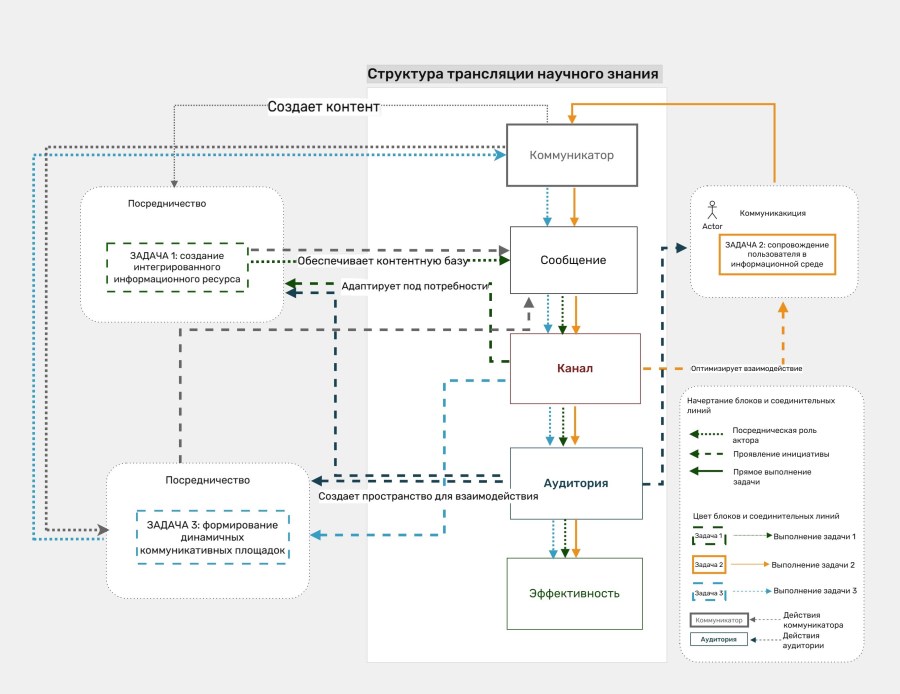
The purpose of the article is to comprehend the role of libraries in the system of communication between science and society for to reveal and analyze the actual tasks of libraries as the channel of connection between the scientific community and a wide audience. Two interrelated aspects of library participation in the communication between science and society are considered. The first aspect – information and communication – is connected with document communications, in which the boundaries between information transmission channels are blurred. In the context of declining demand for traditional libraries, the media library model is being updated, characterized by remote access to resources and a personalized approach to user service. The second aspect – socio-cultural – shifts the focus from the simple provision of information by the library to the creation of the environment for interaction, learning and cultural development.
The article characterizes the libraries’ tasks, carried out in the process of popularizing scientific knowledge in the library environment. The effectiveness of joint implementation of three key goals of communication activities: information, entertainment, and persuasion, contributing to the transmission of scientific knowledge to the audience and stimulating its cognitive activity is emphasized. The connection of five elements of G. Lasswell's model with key communication goals, applied to library practice: communicator – librarian-popularizer, scientist, scientific communicator; message – scientific information in an accessible form (events, collections, digital resources); channel – the library as an integrated platform; audience – readers with different levels of training; effectiveness – increased engagement, requests, and scientific literacy is exposed.
INFORMATION AND LIBRARY SYSTEMS, RESOURCES AND TECHNOLOGIES
The purpose of the article is to present the research directions of the Russian National Public Library for Science and Technology (Russian NPLSaT) on implementing artificial intelligence (AI) elements into scientific and technical information systems. The focus is on two key directions: semantic transformation of user queries and automatic summarization and annotation of full-text materials. Approaches to normalization, enrichment, and structuring of queries using AI technologies to improve the completeness and accuracy of search in library catalogs and open archives are analyzed. Content and formal requirements for automatically generated abstracts and annotations are discussed, along with quality evaluation metrics (ROUGE, expert assessment). The paper presents experimental results comparing large language models (MBart, T-Bank) on datasets from the journal “Scientific and Technical Libraries” and environmental information collections of Russian NPLSaT. The conclusion emphasizes the necessity of synthesizing traditional library competencies with innovative AI technologies to ensure the competitiveness of scientific libraries in the new digital reality.

The purpose of the work is to elaborate the complex index for independent estimating the quality of library services (IНОК), which includes 4 sub-indices of the 100-points scale; as well as to propose the complex instrument for assessing various aspects of library services. It is in free access and copying for representatives of any library. The analysis of the work of 89 regional libraries of the Russian Federation on an independent assessment of the quality of services provided has been carried out. The research uses the following methods: content analysis, conceptual modeling, comparative analysis, problematization.
The conclusion has been made that quantitative assessment of library services is paid no sufficient attention in domestic libraries. Thus, it is advisable to use indicators of library services effectiveness which are worldwide used but rarely found in domestic practice. We have considered a comprehensive tool for assessing the quality of library and information services in the form of an interactive calculator, which includes: a) Customer Satisfaction Score, CSAT; b) Net Promoter Score, NPS; c) Customer Effort Score, CES; d) Average Ticket Time, ATT; e) First Contact Resolution, FCR; f) Customer Acquisition Cost, CAC; g) Customer Retention Rate, CRR; h) Customer Lifetime Value, CLV; i) an assessment of the comparison of the cost of attracting a customer with its lifetime value, CAC-to-CLV; k) an indicator of the effectiveness of attracting customers over a period of time. As an instrument of practical analysis, the complex index for independent estimating the quality of library services (IНОК) has been elaborated.

The purpose of this article is to present a new method for preserving and promoting the scientific heritage of chemists: creation of an intelligent system (IS), based on artificial intellect (AI), for processing chemical literature, on the example of publications by Academician A. E. Favorsky.
Libraries employ various models to preserve scientific heritage and popularize science – ranging from lectures, exhibitions, memorial libraries of scientists, and bibliographic databases of research publications to modern formats based on state-of-the-art generative AI patterns. The authors briefly describe the experience of the Central Scientific Library of the Federal Research Center Irkutsk Institute of Chemistry (Siberian Branch of the Russian Academy of Sciences) named after A. E. Favorsky in preserving the scientific heritage of chemists. The development of AI systems in the field of chemistry requires the creation of independent datasets based on verified information, as well as the development of intelligent systems for the machine analysis of chemical literature. The article justifies the selection of the works of an eminent organic chemist – Academician A. E. Favorsky – as a reliable primary source for creating benchmark-training datasets intended for the digitization and subsequent recognition of chemical graphs within his texts. It presents AI tools, being developed by the library for chemical text recognition, specifically the application of Optical Chemical Structure Recognition (OCSR) technologies to convert molecular graphs into a machine-readable format (SMILES).
The library’s work in creating modern intellectual tools not only brings historical knowledge into digital circulation but also sparks the interest of younger generations in the profession of a research chemist.
BOOK HERITAGE AND BOOK CULTURE
The purpose of the article is to demonstrate, using a specific example, the role of information exchange between collectors in the process of forming private and public collections of monuments of book and documentary writing. Collecting is a multi-stage process. The acquisition of a written monument is preceded by a preparatory stage, which includes the search for the monument, negotiations with the owner on the terms of sale or transfer. The success mainly depends on collector’s awareness of the availability and location of the monument, therefore the correspondent network, through which relevant information is shared and, sometimes, negotiations with the owner take place, plays a particularly important role in this process. As a result, the conclusion has been made, that public and private collectors may use the same sources of acquisitions, correspondent networks, and channels for collecting and disseminating information about literary monuments. The final stage in the assignment of a monument to a particular collection is the decisive one, determined by the collector's personal interest, financial and administrative resources, and sometimes a combination of circumstances.
All these stages and mechanisms are clearly illustrated by N. P. Rumyantsev’s attempt to acquire a 14th-century parchment document. During the research, the location of the original document has been established, included as a part of a private collection in the major state collection.
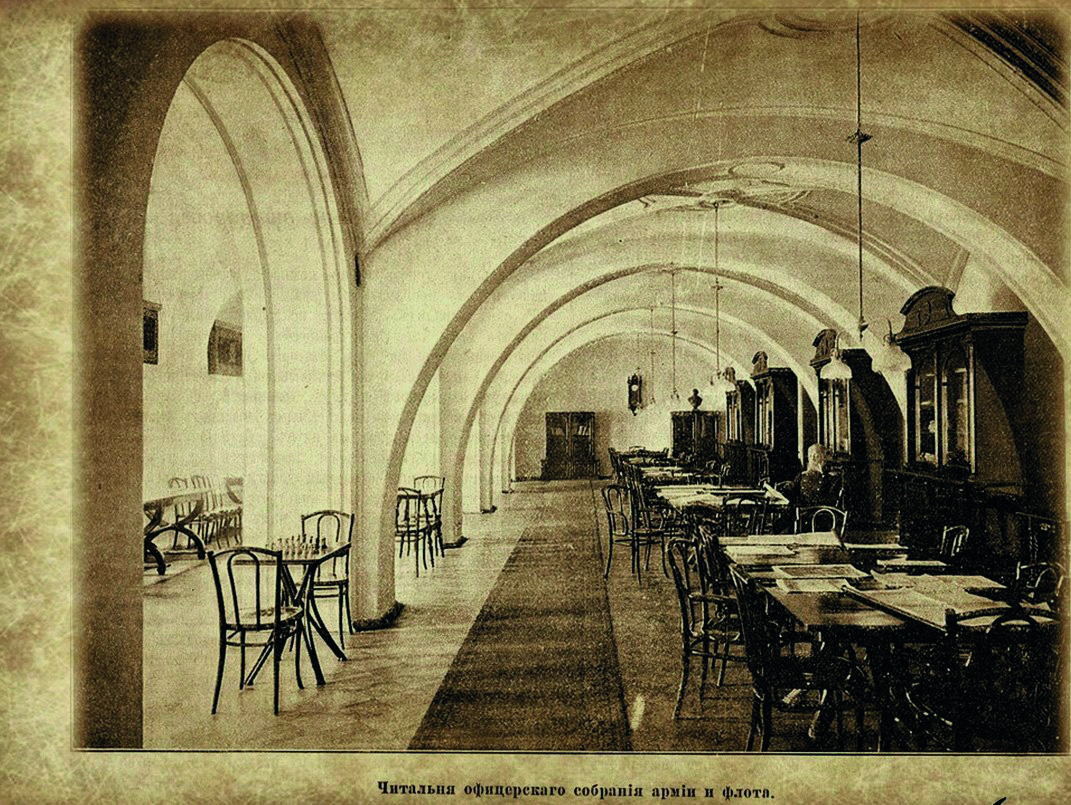
The purpose of the article is to recreate the history of the library of the Officers’ House of the Leningrad Military District (LVO), which became the main library institution in the Leningrad garrison. Located in the building of the former Officers’ Assembly of the Army and Navy, it was accessible to all military personnel of the garrison and their families. For the first time in historiography, the article provides information about the transformation of the military and scientific library of the Officers’ Assembly of the Russian Army into the mass library of the Leningrad House of the Red Army and Navy. Basing on archival sources, media publications, and legal acts, the author examines the process of forming the library collection and new readership, as well as identifies the tasks set by the command during the first stage of the Red Army construction. The article also provides information about the library work regulations and its place and significance in the system of political and educational activities in LVO and garrison troops in 1918–1925. The retrospective of the library restructuring can be useful for optimizing the activities of similar institutions in the Russian Armed Forces, as well as for promoting book-related activities.
The purpose of this article is to present information on the publication of educational and instructional literature in Eastern Siberia at the beginning of the 20th century. The work provides an overview of contemporary research on the subject and presents statistical data regarding regional publication output, as well as information on availability of such literature in libraries and its representation in the printed catalogs. The comparison of the output of educational and instructional literature in Eastern Siberia at the beginning of the 20th century with the preceding period revealed quantitative growth. Furthermore, the range of disciplines covered by these publications expanded significantly.
However, Eastern Siberia lagged significantly behind Western Siberia and the Russian Far East, due to the absence of higher education institutions in the region. Educational and methodological literature that was published consisted primarily of reports, surveys, catalogs, and works on the history of educational institutions.
The purpose of the article is to reconstruct the composition of the personal library of the Russian diplomat and orientalist N. F. Petrovsky (1837–1908) and to define its scientific significance. The study reconstructs the composition and structure of the personal book collection; identifies its thematic focus and typological features; determines scientific and source value of the collection for the history of book culture in Russia in the second half of the 19th century. The article presents a brief biography of N. F. Petrovsky, an analysis of the historiography by the degree of study of the topic, gaps and prospects for further research. The scientific activity of N. F. Petrovsky and its connection with the formation of his personal library are highlighted. The author marks out the main thematic areas of publications from the personal book collection of N. F. Petrovsky. Ownership bookmarks (exlibris, notes, marginalia) are identified as sources of biographical and intellectual history. The scientific novelty lies in the introduction of systematized data about Petrovsky's library into scientific circulation: key sources that shaped the orientalist's scientific outlook and the connection between his professional activity and the composition of the book collection.

The purpose of the article is to present the history of book publishing in the Eastern Transbaikalia during the Great Patriotic War. The relevance of the research is determined by the high scientific value of the comprehensive analysis of the historical context of the development of book business in individual regions of the Russian Federation, which makes it possible to identify fundamental patterns and idiosyncratic characteristics of regional book publishers. The methodological basis of the research combines principles of historicism, consistency, objectivity and the method of content analysis. The source database has been formed on the materials from the State Archive of the Trans-Baikal Territory (collections P-3 “Chita Regional Committee of the Communist Party of the RSFSR”, P-6 “Chita Regional Executive Committee”, P-144 “Chita Regional Book and Magazine State Publishing House”, P-329 “Primary CPSU organization of the publishing houses administration’ printing house”, the State Archive of the Russian Federation (collection A-259 “Council of Ministers of the RSFSR”), as well as the local newspaper “Zabaikalsky Rabochy”.
The analysis of these sources has revealed serious difficulties in the field of book publishing: a severe shortage of paper, technical backwardness of printing equipment, and a significant reduction of production capacities. It is stated that the focus of printed materials’ themes has shifted towards military-patriotic, political, agitation, propaganda, and agricultural materials. The author provides a detailed description of the process of forming the unified editorial and publishing structure, concluded with the establishment of the Chita Regional Book Publishing House.
INFORMATION
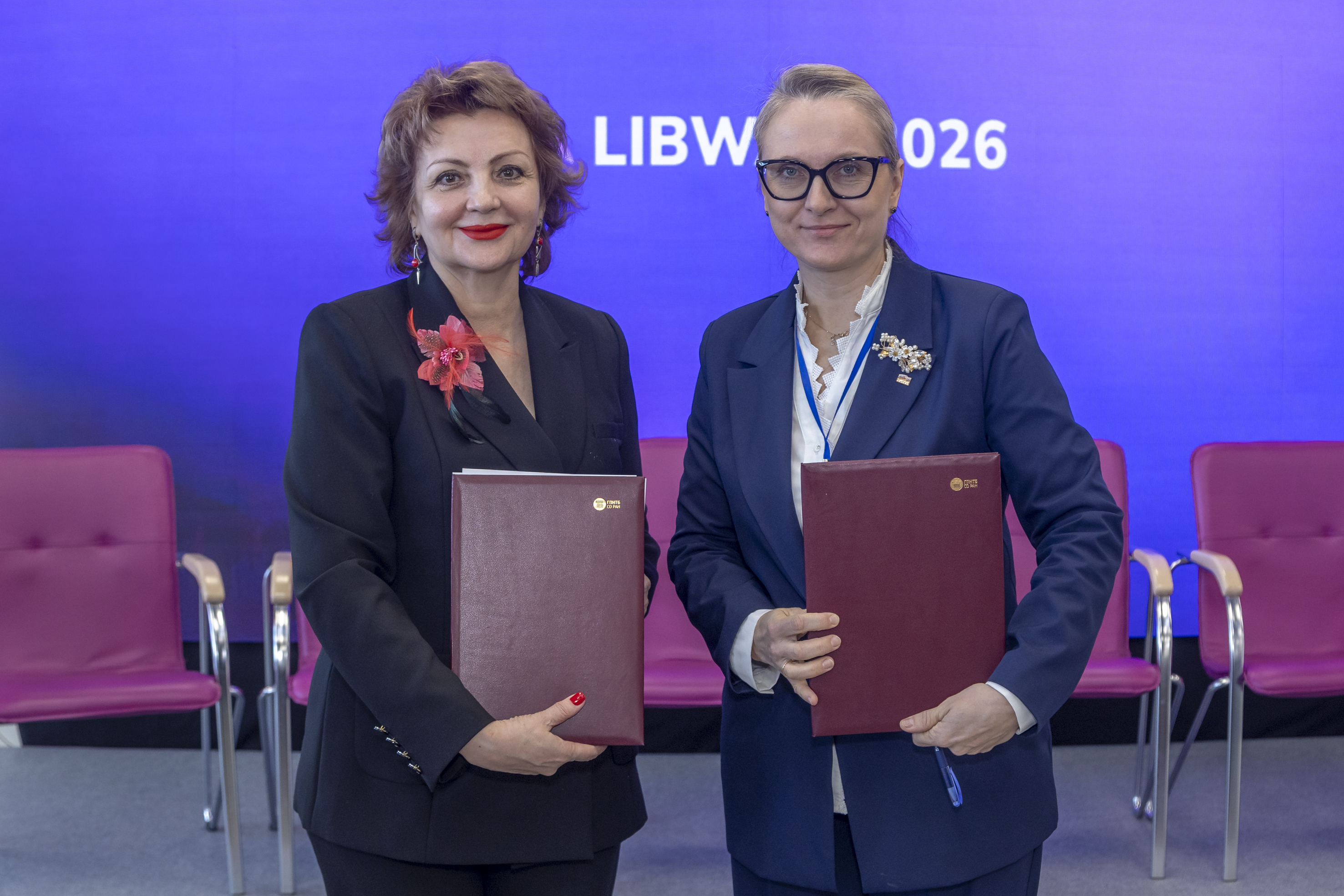
On March 23, 2026, as part of the “Science, Technology and Information in Libraries (Libway-2026)” conference, a two-part roundtable discussion titled “AI for Libraries or Libraries for AI” was held, bringing together more than 20 speakers from Russia, India, Malaysia, Mozambique, Namibia, and Egypt. The organizers recognized a turning point: libraries ceased to be mere repositories of knowledge, becoming architects of trust in the era of generative intelligence. The participants discussed not only the use of neural networks, but also how library collections could become the foundation for sovereign AI, and faced the main challenges, from “hallucinations” models to lack of computing power and new ethics.

ISSN 2712-7915 (Online)


